Boca Raton patients have local wound-care options. Some wounds can and should be managed close to home.
But when a wound is not healing, keeps draining, opens after surgery, exposes tendon, bone, or hardware, or occurs in a fragile patient, the question changes:
Is this still a routine wound-care problem, or does it need Level I trauma-informed reconstructive wound care?
Level I trauma-informed wound care means experience with the kind of tissue failure, contamination, exposed structures, fragile skin, surgical failure, and reconstructive decision-making seen in serious trauma and complex wound breakdown.
When the wound is no longer routine, the right expertise a few miles up the road can matter more than the closest appointment.
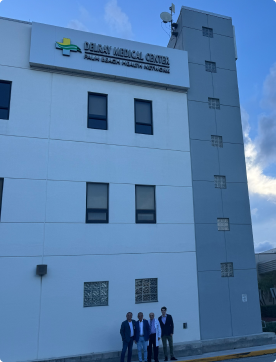
There is a reason many of the area’s most difficult wounds are evaluated through our Delray Beach wound and reconstructive care pathway.
Request a Boca-area wound evaluation through our Delray Beach reconstructive wound care pathway.
Community Wound Referral
Delray Advanced Wound Center: (561) 495-3412
Community Wound Care Has a Place
Knowing When the Wound Has Outgrown It Is the Point.
Community wound care is appropriate for many patients.
Routine ulcers, straightforward dressing needs, stable wounds, and uncomplicated follow-up may be managed well in a community setting.
But some wounds stop being routine.
A wound that is worsening, draining, opening after surgery, exposing tendon, bone, or hardware, or failing in a medically fragile patient requires a different level of thinking.
This is not about making every wound complicated.
It is about recognizing when the wound has already become complicated.
Wound Care Backed by Published Reconstructive Experience
This is wound care from surgeons with published and nationally presented experience in fragile-skin injuries, traumatic wounds, postoperative wound breakdown, exposed tendon, exposed bone, exposed hardware, and complex soft-tissue reconstruction.
That experience matters because difficult wounds teach lessons routine wounds do not.
Better wound care starts before the wound becomes complex.
Delray Advanced Wound Center: (561) 495-3412
The Wound Does Not Heal Because the Building Is Polished
A polished local program can look reassuring.
But appearance is not expertise.
A wound heals when the biology is understood: tissue viability, blood supply, bacterial burden, swelling, pressure, motion, patient risk, surgical history, and timing.
If the wound is healing, good.
If it is not, the question is not:
Which bandage next?
The question is:
Why is this wound not healing — and what needs to change?
A Bandage Can Be Changed by Almost Anyone. Understanding Why the Wound Is Failing Is Different.
Real wound care is not bandage supervision.
It is understanding tissue failure.
It is understanding blood supply, bacterial burden, swelling, pressure, motion, fragile skin, exposed tendon, exposed bone, exposed hardware, prior surgery, patient risk, and timing.
A wound-care plan is only as strong as the wound-healing science behind it.
Without that depth, wound care can become bandage management.
A Small Wound on the Wrong Patient Is Not a Small Problem
Some wounds are simple.
Some only look simple.
A small wound in a healthy patient is one thing.
A small wound in a Boca patient recovering from surgery, living with fragile skin, diabetes, swelling, poor circulation, blood thinners, prior radiation, infection risk, exposed tendon, exposed bone, or orthopedic hardware is something else entirely.
The wound may look minor.
The patient may not be.
That is why routine assumptions can be dangerous.
No Handbook Can Replace Deep Knowledge of the Science of Wound Healing
Handbooks have a place.
Checklists have a place.
Standard wound protocols have a place.
But no handbook can replace deep scientific knowledge of how wounds actually heal — and why they fail.
A bandage can sit on a wound.
It cannot explain why the wound is failing.
It cannot judge whether tissue is alive.
It cannot recognize marginal blood supply.
It cannot decide whether exposed tendon, bone, or hardware changes the stakes.
It cannot know when another week of waiting is no longer harmless.
Wounds are biology, not paperwork.
The plan should answer to the wound, the patient, and the science.
A Wound Can Be Followed Carefully and Still Not Be Led
Following a wound means recording what happened.
Leading a wound means understanding why it happened, what is likely to happen next, and when the plan needs to change.
Not every wound needs surgery.
Not every delayed wound is mismanaged.
Not every bandage plan is wrong.
But when a wound keeps draining, opening, darkening, enlarging, exposing deeper structures, or failing in a fragile patient, passive observation can become drift.
And drift is how small problems become reconstructive problems.
Delray Advanced Wound Center: (561) 495-3412
Already in Wound Care, But Not Getting Answers?
Many patients come to us after the wound has already been seen, dressed, measured, and followed.
That does not mean prior care was wrong.
It means the wound is still not healing.
When the bandages keep changing but the explanation does not, it may be time to ask a different question:
Is this still a routine wound-care problem, or has it become a reconstructive problem?
That question should not wait until the wound becomes catastrophic.
Our Comfort Level Begins Where Routine Wound Care Gets Nervous
We are comfortable with wounds that make routine care uncomfortable.
That does not mean every wound needs surgery.
It means the evaluation starts at a higher level.
We do not confuse weekly visits with progress.
We do not mistake bandage changes for strategy.
We do not minimize a wound because it looks small on the surface.
We do not wait for a fragile patient to prove the wound was serious.
The goal is simple:
Recognize the problem before the wound makes the decision for you.
Delray Advanced Wound Center: (561) 495-3412
Boca Raton Wound Care With Reconstructive Judgment
We evaluate wounds that are:
- not healing
- not behaving
- getting larger
- draining
- painful
- concerning for infection
- open after surgery
- related to cosmetic, orthopedic, vascular, spine, or general surgery
- caused by falls or trauma
- associated with fragile skin
- complicated by diabetes
- complicated by poor circulation
- complicated by swelling
- complicated by anticoagulation
- complicated by prior radiation
- complicated by exposed tendon, bone, or hardware
- stalled despite repeated bandage changes
- being followed without clear progress
- becoming more complicated over time
You do not need to decide whether the wound is serious enough.
That is our job.
For Boca Raton Patients and Families Who Know Something Is Off
You may not know the medical terminology.
You may simply know the wound is not right.
The wound is not closing.
The skin looks worse.
The drainage continues.
The appointments continue.
The bandages keep changing.
But the explanation does not improve.
You are not being difficult.
You are noticing.
And when something is not healing, noticing matters.
This is especially important for older patients, fragile-skin patients, diabetic patients, patients on blood thinners, patients recovering from surgery, and patients in rehab, assisted living, home health, or post-acute care.
Delray Advanced Wound Center: (561) 495-3412
The Right Question Is Not “What Goes on the Wound?”
The right questions are:
Why is the wound here?
Why is it not healing?
Is the tissue alive?
Is the blood supply enough?
Is swelling preventing closure?
Is infection controlled?
Is pressure or motion pulling it apart?
Is tendon, bone, or hardware exposed?
Is the patient too fragile for routine assumptions?
Is the current plan actually working?
What happens if we wait?
That is the difference between bandaging a wound and understanding it.
Local Wound Care for Boca Raton and South Palm Beach County
This service is for patients in:
- Boca Raton
- East Boca
- West Boca
- Highland Beach
- Delray Beach
- Deerfield Beach
- Parkland
- Mission Bay
- Broken Sound
- Boca West
- Boca Pointe
- Palm Beach County
- rehab facilities
- assisted living facilities
- home health settings
- post-acute care settings
Patients should not have to wait until a wound becomes catastrophic before someone with reconstructive experience takes it seriously.
Delray Advanced Wound Center: (561) 495-3412
For Physicians, Rehab Facilities, Home Health, Case Managers, and Attorneys
Professional referrals are welcome.
Refer when the wound is stalled, complicated, fragile, exposed, traumatic, postoperative, worsening, or not following the expected course.
Common referral reasons include:
- failed closure
- wound dehiscence
- exposed tendon
- exposed bone
- exposed hardware
- traumatic avulsion
- fragile-skin wound
- complex skin tear
- soft-tissue loss
- stalled healing
- recurrent drainage
- medically complex patient
- post-surgical wound complication
- post-fall wound
- work-related wound
- need for plastic surgery wound evaluation
- concern that routine care is no longer enough
The earlier the reconstructive problem is recognized, the more options may remain.
Request a Wound Evaluation Near Boca Raton
If the wound is not healing, not behaving, or not being taken seriously enough, request an evaluation.
Patients and families are welcome.
Physician referrals are welcome.
Rehab, home health, case manager, attorney, and professional referrals are welcome.
Location: 13660 Jog Road, Suite 4, Delray Beach, FL 33446
Serving: Boca Raton, Delray Beach, Highland Beach, Boynton Beach, Deerfield Beach, Parkland, and South Palm Beach County
Phone: 855-952-7246
Main site: reconstructivetrauma.com